

Hospicio Cabañas Guadalajara is a former hospice turned arts venue, known for José Clemente Orozco’s murals and its neoclassical courtyards. At the site, now called Museo Cabañas, you can see the Main Chapel’s frescoes and explore exhibition spaces in a complex founded to care for people in need.
- Location: Calle Cabañas No. 8, Colonia Las Fresas, Plaza Tapatía, Guadalajara.
- From Aranzazu Eco: about 16 minutes on foot.
- Regular hours: Open Tuesday to Sunday; closed Monday
- Admission: general admission is $160; Tuesday is a free-admission day.
What is Hospicio Cabañas?
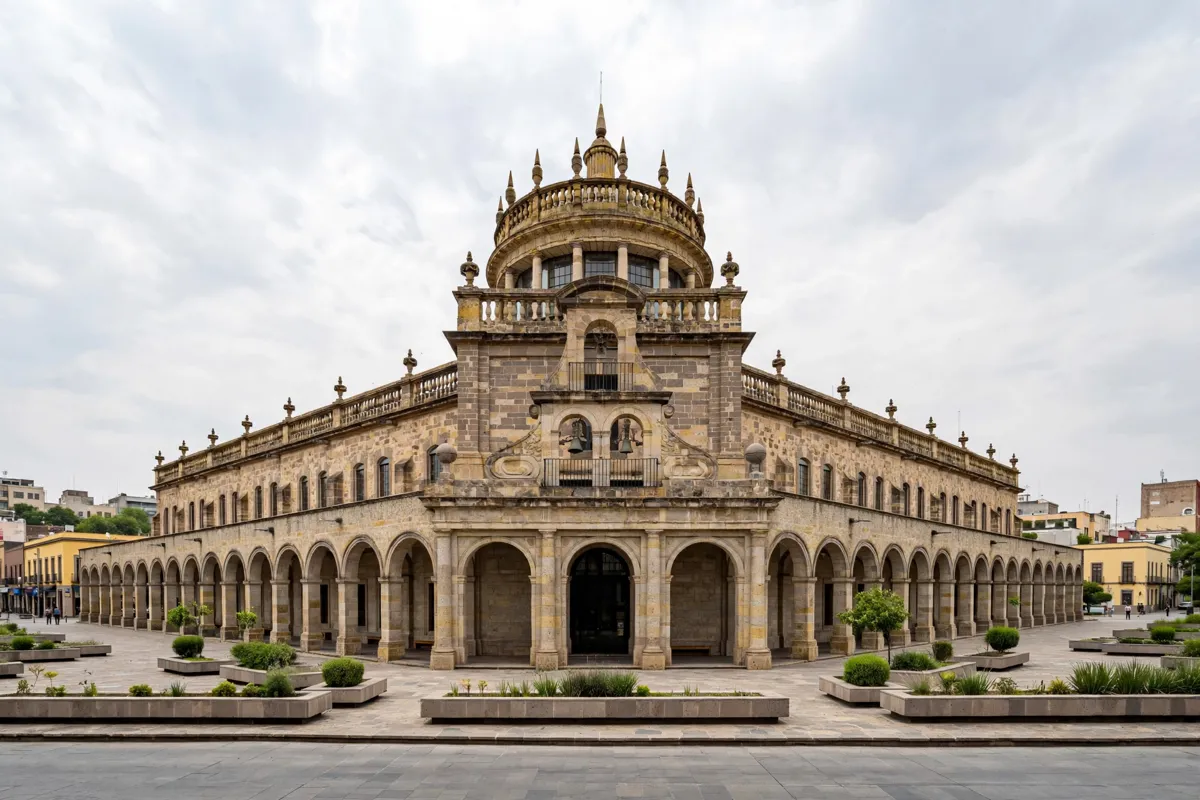
Hospicio Cabañas is a former care institution in Guadalajara that now houses a cultural venue. Founded in the early 19th century by Bishop Juan Cruz Ruiz de Cabañas y Crespo, it was created to shelter orphaned children, older people and others in need.
Architect Manuel Tolsá designed the complex, and his disciple José Gutiérrez oversaw construction. It opened in 1810 as the Casa de la Caridad y la Misericordia. The main dome was completed in 1846 by architect Manuel Gómez Ibarra. For more than 150 years, the building functioned as a hospice; at some periods, it housed over 3,000 children.
A government decree changed the former hospice’s purpose in 1980, and it was adapted as an arts venue in 1983. UNESCO inscribed Hospicio Cabañas on the World Heritage List in 1997. Its address is Calle Cabañas No. 8, Colonia Las Fresas, Plaza Tapatía, CP 44360, Guadalajara, Jalisco.
What should you look for in the Hospicio Cabañas murals?
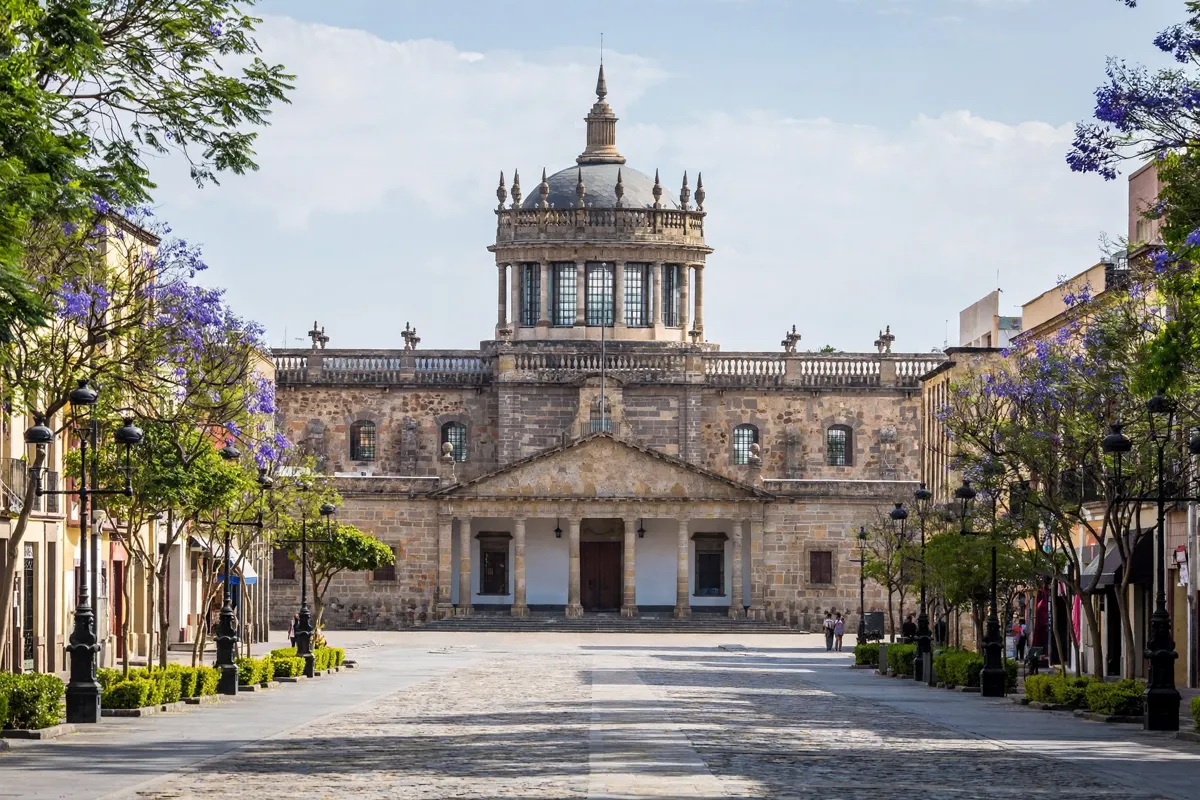
The Main Chapel is home to José Clemente Orozco’s fresco series, including the dome painting El hombre de fuego (The Man of Fire). Orozco painted 57 frescoes there between 1937 and 1939.
The museum describes the murals as addressing Mexico’s history, human existence, destruction and creation, and the ethical dilemmas of modernity. The subject matter gives the chapel’s painted surfaces a broader frame than a single historical scene. Take time to look across the series as well as up at the dome.
What can you see in the galleries and courtyard?
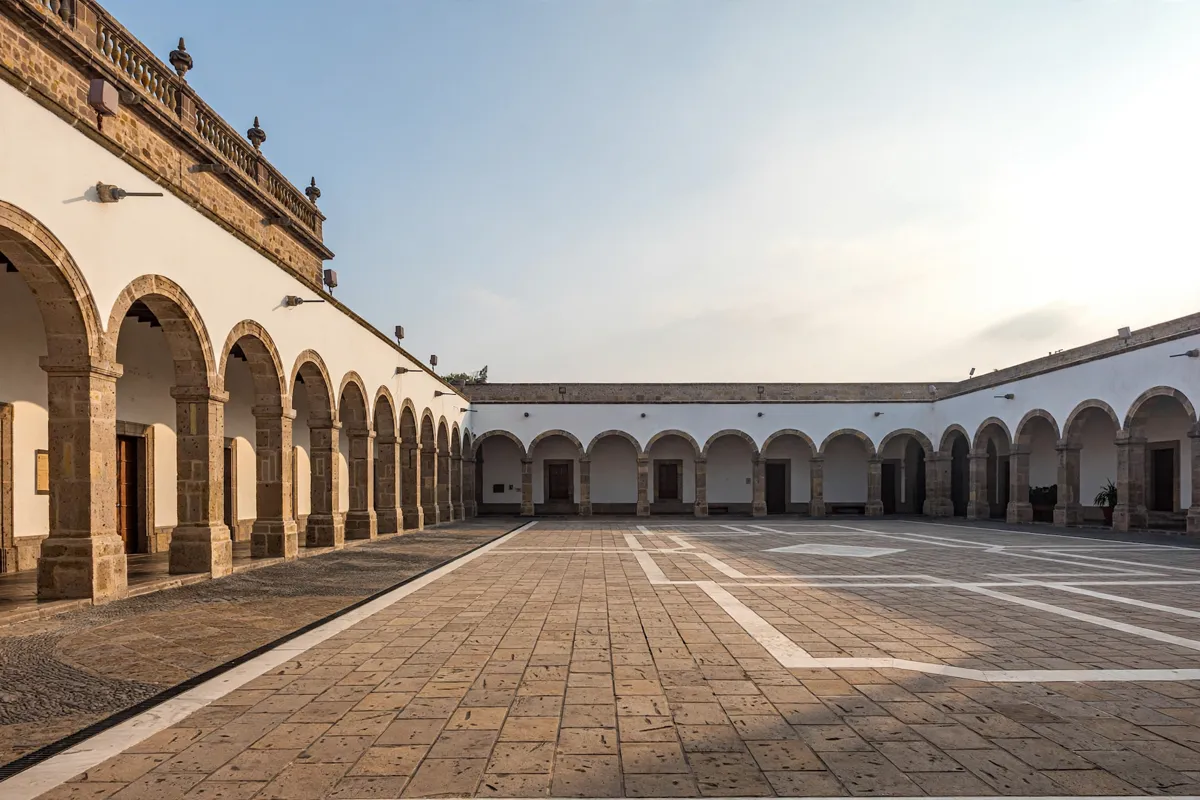
The complex’s layout is part of the visit: it is a symmetrical neoclassical building with interior courtyards, covered corridors, arches and Tuscan-style pillars. The open spaces and arcades offer a different perspective on the site from the mural-filled chapel.
The former hospice also has a second, more sober chapel called Capilla Tolsá, which functioned as the hospice refectory. Mexico’s federal Cultural Information System records two permanent exhibition rooms—Museo de Sitio and José Clemente Orozco’s work—and 18 temporary exhibition rooms. Guided visits are among the museum’s services.
How do you get to Hospicio Cabañas?
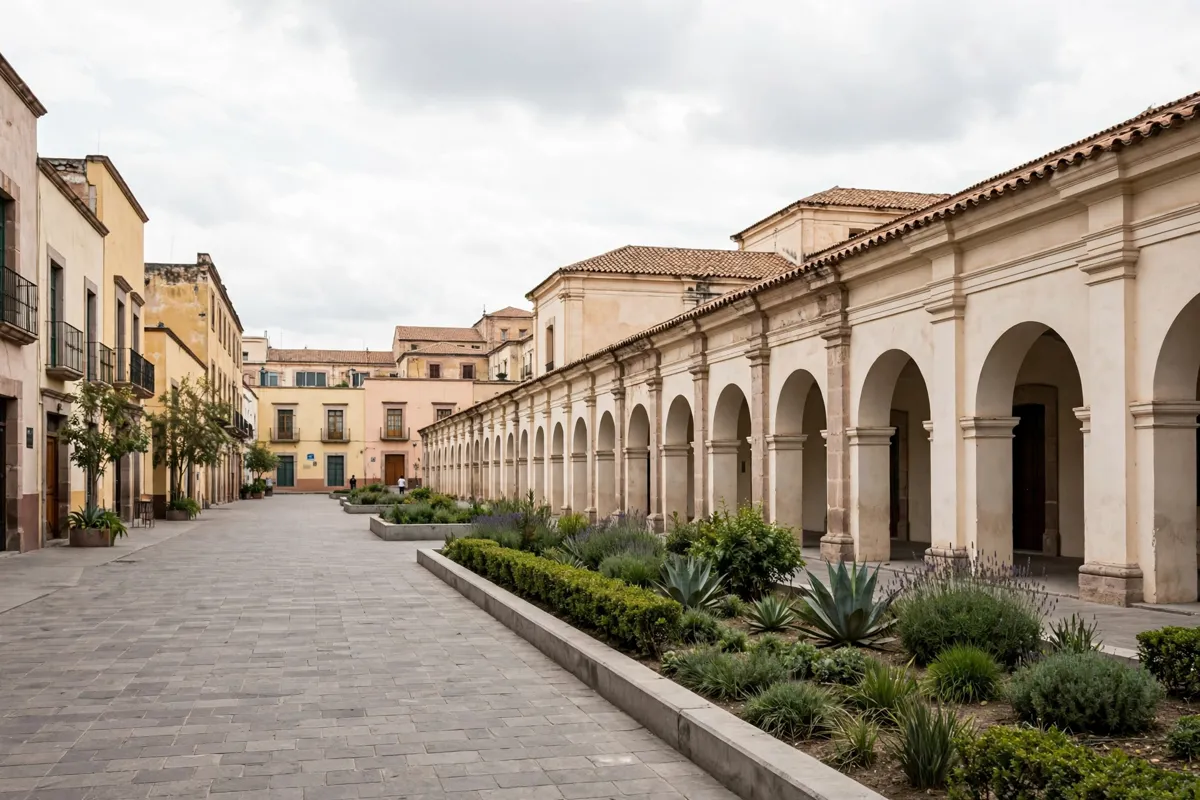
The museum’s address can help you orient yourself at Plaza Tapatía. If you’re building a broader day on foot, the one-day Guadalajara walking route from the historic centre gives the visit a natural place in a city-centre itinerary.
What visitor details should you check?
Check the official site before you go, since hours and admission details can change.
Opening hours
- Tuesday to Sunday: 10:00–17:00
- Monday: closed
Last checked November 2026. Hours can change on holidays and for special events.
General admission is $160. Other admission rates are $135 for adults with national identification; $110 for children, older adults with INSEN identification, pensioners, people with disabilities, and students and teachers with national identification; and $140 for older adults, students and teachers from abroad. Admission for groups of 20 people is $110.
Cine Cabañas admission is $65, Experiencia 1 is $180 and Experiencia 2 is $130. A Guadalajara day that includes Mercado Libertad (San Juan de Dios) can be planned with the guide to visiting Mercado Libertad.
FAQs
What is the official name of Hospicio Cabañas today?
The museum is called Museo Cabañas and was formerly known as Hospicio Cabañas.
What is the best-known mural at Hospicio Cabañas?
Orozco’s 57-fresco series in the Main Chapel includes El hombre de fuego, painted on the dome.
What are the permanent exhibition rooms?
The permanent rooms are Museo de Sitio and José Clemente Orozco’s work.
Does the museum offer guided visits?
Guided visits are among the museum’s services.